
Step 4 / Supportive Periodontal Therapy (SPT)
Lifelong maintenance — risk-adapted recall (3–12 months), full-mouth probing, individualised reinforcement of OH and PMPR (R7.x). 'A perio patient never ceases to be a perio patient.'
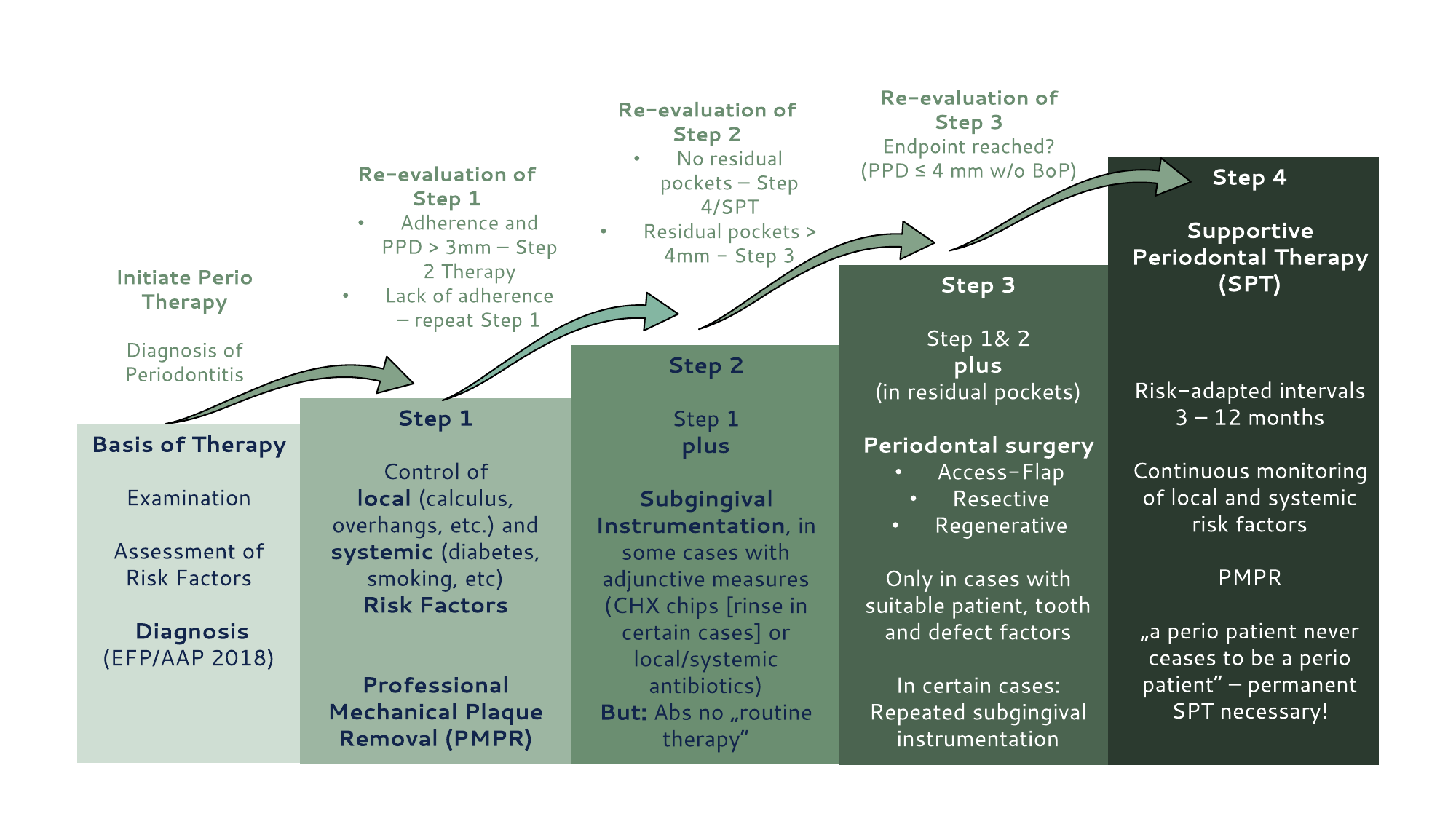
SPT is lifelong. The reduced periodontium remains a chronic-disease state — recurrence is the main risk to manage.
Evidence Guidelines & evidence
- EFP S3 R7 — SPC frequency
Supportive periodontal care visits should be tailored to the patient's risk profile, typically every 3 to 6 months for treated periodontitis patients.
- 2018 World Workshop — Reduced healthy periodontium
After successful treatment, patients have a reduced but stable periodontium and require lifelong supportive care to prevent disease recurrence.
1 Risk-based recall scheduling
Recall frequency tailored to grade (A/B/C) and individual risk profile — typically 3–6 months for treated periodontitis patients (R7.x). Document risk factors at every visit. A perio patient never ceases to be a perio patient — SPT is lifelong.
2 Full-mouth assessment at every recall
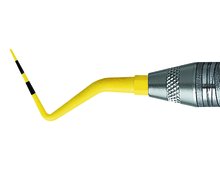
Probing depths at six sites per tooth, BOP, plaque index, mobility check, screening for caries and prosthetic factors. Compare to prior visits.

3 Reinforcement of self-performed plaque control
Re-instruct OH including interdental brushes, electric brushes, antiseptic mouth rinses where indicated. Smoking cessation and glycaemic control reinforcement at every visit.
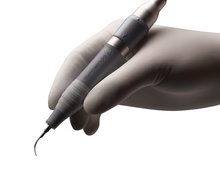
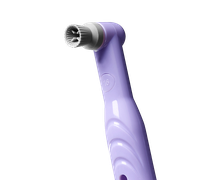
4 Professional mechanical plaque removal
Supragingival + targeted subgingival PMPR. Re-instrumentation of residual pockets. Aim: maintain PD ≤ 4 mm with no BOP at every site. Sterify Gel may be considered as a non-antibiotic adjunct at sites with localised inflammation during recall visits.


Expert perspectives
“SPT is where treatment outcomes are kept. The recall interval is the most important clinical decision after the initial therapy.”